Azure RBAC Built-In Administrator Roles Assigned
Identifies when a user is assigned a built-in administrator role in Azure RBAC (Role-Based Access Control). These roles provide significant privileges and can be abused by attackers for lateral movement, persistence, or privilege escalation. The privileged built-in administrator roles include Owner, Contributor, User Access Administrator, Azure File Sync Administrator, Reservations Administrator, and Role Based Access Control Administrator.
Elastic rule (View on GitHub)
  1[metadata]
  2creation_date = "2025/09/15"
  3integration = ["azure"]
  4maturity = "production"
  5updated_date = "2026/09/17"
  6
  7[rule]
  8author = ["Elastic"]
  9description = """
 10Identifies when a user is assigned a built-in administrator role in Azure RBAC (Role-Based Access Control). These roles
 11provide significant privileges and can be abused by attackers for lateral movement, persistence, or privilege
 12escalation. The privileged built-in administrator roles include Owner, Contributor, User Access Administrator, Azure
 13File Sync Administrator, Reservations Administrator, and Role Based Access Control Administrator.
 14"""
 15from = "now-9m"
 16index = ["filebeat-*", "logs-azure.activitylogs-*"]
 17language = "kuery"
 18license = "Elastic License v2"
 19name = "Azure RBAC Built-In Administrator Roles Assigned"
 20note = """## Triage and analysis
 21
 22### Investigating Azure RBAC Built-In Administrator Roles Assigned
 23
 24This rule identifies when a user is assigned a built-in administrator role in Azure RBAC (Role-Based Access Control). These roles provide significant privileges and can be abused by attackers for lateral movement, persistence, or privilege escalation. The privileged built-in administrator roles include Owner, Contributor, User Access Administrator, Azure File Sync Administrator, Reservations Administrator, and Role Based Access Control Administrator. Assignment can be done via the Azure portal, Azure CLI, PowerShell, or through API calls. Monitoring these assignments helps detect potential unauthorized privilege escalations.
 25
 26#### Privileged Built-In Administrator Roles
 27- Contributor: b24988ac-6180-42a0-ab88-20f7382dd24c
 28- Owner: 8e3af657-a8ff-443c-a75c-2fe8c4bcb635
 29- Azure File Sync Administrator: 92b92042-07d9-4307-87f7-36a593fc5850
 30- Reservations Administrator: a8889054-8d42-49c9-bc1c-52486c10e7cd
 31- Role Based Access Control Administrator: f58310d9-a9f6-439a-9e8d-f62e7b41a168
 32- User Access Administrator: 18d7d88d-d35e-4fb5-a5c3-7773c20a72d9
 33
 34### Possible investigation steps
 35
 36- Identify the user who assigned the role and examine their recent activity for any suspicious actions.
 37- Review the source IP address and location associated with the role assignment event to assess if it aligns with expected user behavior or if it indicates potential unauthorized access.
 38- Check the history of role assignments for the user who was assigned the role to determine if this is a recurring pattern or a one-time event.
 39    - Additionally, identify the lifetime of the targeted user account to determine if it is a newly created account or an existing one.
 40- Determine if the user assigning the role historically has the necessary permissions to assign such roles and has done so in the past.
 41- Investigate any recent changes or activities performed by the newly assigned administrator to identify any suspicious actions or configurations that may have been altered.
 42- Correlate with other logs, such as Microsoft Entra ID sign-in logs, to identify any unusual access patterns or behaviors for the user.
 43
 44### False positive analysis
 45
 46- Legitimate administrators may assign built-in administrator roles during routine operations, maintenance or as required for onboarding new staff.
 47- Azure Kubernetes Service control-plane operations may assign the Contributor role to service principals. Assignments initiated by the Microsoft-owned AzureContainerService application are excluded.
 48- Repeated writes for the same role assignment ID by the same initiating principal are suppressed for one hour.
 49- Review internal tickets, change logs, or admin activity dashboards for approved operations.
 50
 51### Response and remediation
 52
 53- If administrative assignment was not authorized:
 54  - Immediately remove the built-in administrator role from the account.
 55  - Disable or lock the account and begin credential rotation.
 56  - Audit activity performed by the account after elevation, especially changes to role assignments and resource access.
 57- If suspicious:
 58  - Notify the user and confirm whether they performed the action.
 59  - Check for any automation or scripts that could be exploiting unused elevated access paths.
 60  - Review conditional access and PIM (Privileged Identity Management) configurations to limit elevation without approval.
 61- Strengthen posture:
 62  - Require MFA and approval for all privilege escalation actions.
 63  - Consider enabling JIT (Just-in-Time) access with expiration.
 64"""
 65references = [
 66    "https://learn.microsoft.com/en-us/azure/role-based-access-control/built-in-roles",
 67    "https://orca.security/resources/research-pod/azure-identity-access-management-iam-active-directory-ad/",
 68    "https://www.microsoft.com/en-us/security/blog/2025/08/27/storm-0501s-evolving-techniques-lead-to-cloud-based-ransomware/",
 69]
 70risk_score = 73
 71rule_id = "1a1046f4-9257-11f0-9a42-f661ea17fbce"
 72severity = "high"
 73tags = [
 74    "Domain: Cloud",
 75    "Domain: Identity",
 76    "Data Source: Azure",
 77    "Data Source: Azure Activity Logs",
 78    "Platform: Azure",
 79    "Rule Type: Custom Query (KQL)",
 80    "Use Case: Identity and Access Audit",
 81    "Tactic: Privilege Escalation",
 82    "Tactic: Persistence",
 83    "Resources: Investigation Guide",
 84    "Noise: Medium",
 85    "Performance: Normal",
 86]
 87timestamp_override = "event.ingested"
 88type = "query"
 89
 90query = '''
 91data_stream.dataset: azure.activitylogs and
 92    event.action: "MICROSOFT.AUTHORIZATION/ROLEASSIGNMENTS/WRITE" and
 93    azure.activitylogs.properties.requestbody.properties.roleDefinitionId:
 94    (
 95      *18d7d88d-d35e-4fb5-a5c3-7773c20a72d9* or
 96      *f58310d9-a9f6-439a-9e8d-f62e7b41a168* or
 97      *b24988ac-6180-42a0-ab88-20f7382dd24c* or
 98      *8e3af657-a8ff-443c-a75c-2fe8c4bcb635* or
 99      *92b92042-07d9-4307-87f7-36a593fc5850* or
100      *a8889054-8d42-49c9-bc1c-52486c10e7cd*
101    ) and not (
102        azure.activitylogs.identity.claims.appid: "7319c514-987d-4e9b-ac3d-d38c4f427f4c" and
103        azure.activitylogs.identity.authorization.evidence.role: "Service Owner role" and
104        azure.activitylogs.identity.authorization.evidence.principal_type: "ServicePrincipal" and
105        azure.activitylogs.properties.requestbody.properties.roleDefinitionId: *b24988ac-6180-42a0-ab88-20f7382dd24c*
106    )
107'''
108
109
110[[rule.threat]]
111framework = "MITRE ATT&CK"
112[[rule.threat.technique]]
113id = "T1098"
114name = "Account Manipulation"
115reference = "https://attack.mitre.org/techniques/T1098/"
116[[rule.threat.technique.subtechnique]]
117id = "T1098.003"
118name = "Additional Cloud Roles"
119reference = "https://attack.mitre.org/techniques/T1098/003/"
120
121
122
123[rule.threat.tactic]
124id = "TA0004"
125name = "Privilege Escalation"
126reference = "https://attack.mitre.org/tactics/TA0004/"
127[[rule.threat]]
128framework = "MITRE ATT&CK"
129[[rule.threat.technique]]
130id = "T1098"
131name = "Account Manipulation"
132reference = "https://attack.mitre.org/techniques/T1098/"
133[[rule.threat.technique.subtechnique]]
134id = "T1098.003"
135name = "Additional Cloud Roles"
136reference = "https://attack.mitre.org/techniques/T1098/003/"
137
138
139
140[rule.threat.tactic]
141id = "TA0003"
142name = "Persistence"
143reference = "https://attack.mitre.org/tactics/TA0003/"
144
145[rule.alert_suppression]
146group_by = [
147    "azure.activitylogs.identity.authorization.evidence.role_assignment_id",
148    "azure.activitylogs.identity.authorization.evidence.principal_id",
149]
150missing_fields_strategy = "doNotSuppress"
151
152[rule.alert_suppression.duration]
153unit = "h"
154value = 1
Triage and analysis
Investigating Azure RBAC Built-In Administrator Roles Assigned
This rule identifies when a user is assigned a built-in administrator role in Azure RBAC (Role-Based Access Control). These roles provide significant privileges and can be abused by attackers for lateral movement, persistence, or privilege escalation. The privileged built-in administrator roles include Owner, Contributor, User Access Administrator, Azure File Sync Administrator, Reservations Administrator, and Role Based Access Control Administrator. Assignment can be done via the Azure portal, Azure CLI, PowerShell, or through API calls. Monitoring these assignments helps detect potential unauthorized privilege escalations.
Privileged Built-In Administrator Roles
- Contributor: b24988ac-6180-42a0-ab88-20f7382dd24c
- Owner: 8e3af657-a8ff-443c-a75c-2fe8c4bcb635
- Azure File Sync Administrator: 92b92042-07d9-4307-87f7-36a593fc5850
- Reservations Administrator: a8889054-8d42-49c9-bc1c-52486c10e7cd
- Role Based Access Control Administrator: f58310d9-a9f6-439a-9e8d-f62e7b41a168
- User Access Administrator: 18d7d88d-d35e-4fb5-a5c3-7773c20a72d9
Possible investigation steps
- Identify the user who assigned the role and examine their recent activity for any suspicious actions.
- Review the source IP address and location associated with the role assignment event to assess if it aligns with expected user behavior or if it indicates potential unauthorized access.
- Check the history of role assignments for the user who was assigned the role to determine if this is a recurring pattern or a one-time event.
- Additionally, identify the lifetime of the targeted user account to determine if it is a newly created account or an existing one.
- Determine if the user assigning the role historically has the necessary permissions to assign such roles and has done so in the past.
- Investigate any recent changes or activities performed by the newly assigned administrator to identify any suspicious actions or configurations that may have been altered.
- Correlate with other logs, such as Microsoft Entra ID sign-in logs, to identify any unusual access patterns or behaviors for the user.
False positive analysis
- Legitimate administrators may assign built-in administrator roles during routine operations, maintenance or as required for onboarding new staff.
- Azure Kubernetes Service control-plane operations may assign the Contributor role to service principals. Assignments initiated by the Microsoft-owned AzureContainerService application are excluded.
- Repeated writes for the same role assignment ID by the same initiating principal are suppressed for one hour.
- Review internal tickets, change logs, or admin activity dashboards for approved operations.
Response and remediation
- If administrative assignment was not authorized:
- Immediately remove the built-in administrator role from the account.
- Disable or lock the account and begin credential rotation.
- Audit activity performed by the account after elevation, especially changes to role assignments and resource access.
- If suspicious:
- Notify the user and confirm whether they performed the action.
- Check for any automation or scripts that could be exploiting unused elevated access paths.
- Review conditional access and PIM (Privileged Identity Management) configurations to limit elevation without approval.
- Strengthen posture:
- Require MFA and approval for all privilege escalation actions.
- Consider enabling JIT (Just-in-Time) access with expiration.
References
-

This article describes the Azure built-in roles for Azure role-based access control (Azure RBAC). It lists Actions, NotActions, DataActions, and NotDataActions.
Read More -
If you’re new to Azure Identity and Access Management (IAM) / Active Directory, this blog post outlines the complexity of Azure role and access management.
Read More -
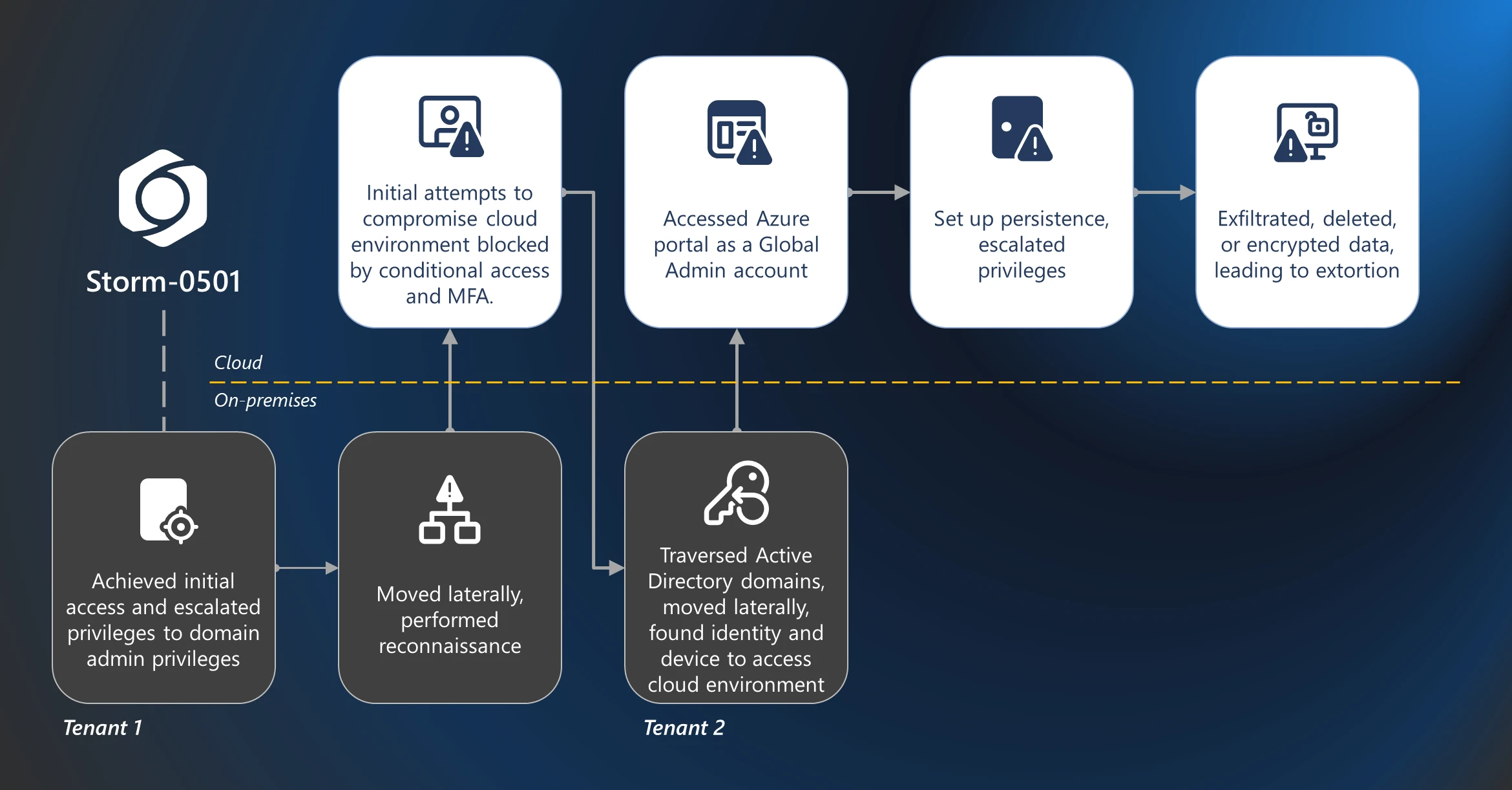
Financially motivated threat actor Storm-0501 has continuously evolved their campaigns to achieve sharpened focus on cloud-based tactics, techniques, and procedures (TTPs). While the threat actor has been known for targeting hybrid cloud environments, their primary objective has shifted from deploying on-premises endpoint ransomware to using cloud-based ransomware tactics.
Read More
Related rules
- AWS IAM Assume Role Policy Update
- MFA Disabled for Google Workspace Organization
- Deprecated - AWS Root Login Without MFA
- Deprecated - Azure Entra Sign-in Brute Force Microsoft 365 Accounts by Repeat Source
- Deprecated - AWS RDS Cluster Creation